Electrical Safety in Hot Weather: Why Coiled Cables Are a Hidden Risk
British summers are getting warmer, and with each heatwave comes a quiet spike in electrical risk that many businesses and homeowners overlook as they rush to add extra cooling, pump up pools and setup outdoor entertainment. Higher ambient temperatures place extra strain on cables, appliances and connections, and one of the most common, and most preventable, hazards is the humble coiled extension lead.
Here is what you need to know, and what to check before the next hot spell.
Why heat changes the rules
Electrical equipment is designed to dissipate the heat it generates while in use. When the surrounding air is already warm, that heat has nowhere to go. Cables, plugs and internal components run hotter for longer, insulation degrades more quickly, and the margin for error gets smaller. Electrical Safety First and UK fire services consistently report that overloaded sockets and overheating leads are among the most common causes of accidental house and workplace fires.
The hidden danger of coiled cables
Extension reels are everywhere, on building sites, behind market stalls, in gardens powering mowers, and tucked behind office desks. They are convenient, but they carry a serious risk that is widely underestimated.
When current flows through a cable, it generates heat. On a fully unwound lead, that heat dissipates harmlessly into the surrounding air. On a coiled reel, the cable is wrapped tightly against itself, and the heat has nowhere to escape.
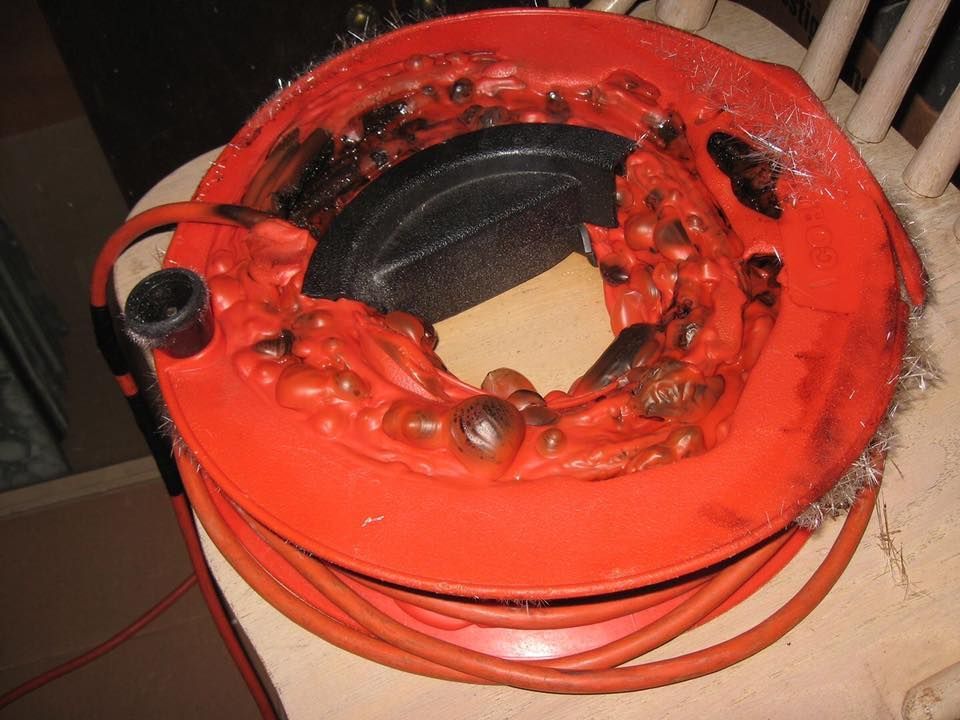
Dorset & Wiltshire Fire and Rescue Service has investigated fires that started exactly this way. Once the temperature climbs high enough, the outer sheath and the insulation on the individual cores can melt. At that point you are not only looking at a fire risk — the earth and neutral conductors can become live, creating a serious risk of electrocution for anyone touching the appliance plugged into the reel.
On a 30°C day, with a partially wound reel powering a high-load appliance, that failure can happen surprisingly quickly. Engineers carrying out routine inspections have found reels with the centre of the coil melted into a solid lump, completely unable to be unwound.
The simple rules to follow
The good news is that this is one of the easiest electrical hazards to manage. A few habits make all the difference:
- Always fully unwind cable reels before use , even if you only need a short length. This is the single most important rule.
- Check the reel's rating. Most reels are marked with two figures — a "wound" rating and an "unwound" rating. The wound rating is significantly lower, and exceeding it is what causes overheating.
- Do not daisy-chain extension leads. Plugging one lead into another multiplies the risk of overheating and overload.
- Keep leads out of direct sunlight and away from radiators, heaters or other heat sources. UV and ambient heat both shorten the life of cable insulation.
- Use the right lead for the job. Indoor leads should not be used outdoors, and only weatherproof leads rated for outdoor use should be powering garden equipment, marquees or outdoor catering kit.
- Watch for the warning signs. A plug that feels hot, a buzzing sound, scorch marks or the smell of melting plastic all mean stop, unplug, and replace.
Why testing matters more in summer
Hot weather doesn't just put pressure on cables in use, it accelerates wear on equipment that was already borderline. A frayed lead, a loose connection or a tired old reel that coped through the winter can fail when the temperature climbs. This is exactly the situation that things like regular visual inspections and Electrical Equipment Testing (EET, formerly known as PAT testing) is designed to catch.
For businesses, schools, landlords and venues, an up-to-date testing schedule is the most reliable way to make sure that the kit on your premises will perform safely. A competent EET inspection will identify damaged leads, overloaded reels and worn insulation before they become a problem, and crucially, it provides documented evidence that you have met your duty of care.
Get ahead of the heat
If your last round of electrical testing was more than twelve months ago, or you have brought new equipment onto site since, summer is a good prompt to get it booked in. A small bit of housekeeping now is far better than the alternative.
If you would like to talk through what testing your site or business needs, get in touch with the Southern EET Testing team, we are happy to help.


Social Landlords Must Now Publish Electrical Safety Data as New Tenant Satisfaction Measure Kicks In